

How to install garden fencing
Garden Fencing and Decking in Devon & Cornwall: Getting the Job Done Properly
A good garden should be somewhere you enjoy spending time. Sometimes that means replacing a tired fence to give you a bit more privacy. Sometimes it means building a deck where you can sit out, have a meal or make better use of an awkward corner.
I’m Kevin from Colt Carpentry Devon, based in Bere Alston and working across Devon and Cornwall, including Tavistock, Plymouth, Okehampton and Exeter. My background is in construction, but carpentry and joinery have always been my passion. I enjoy turning an idea into something useful, well finished and suited to the home it belongs to.
If you’re thinking about new garden fencing or timber decking, this guide explains what I look at before the work starts, the materials involved and why the details underneath matter just as much as the finished appearance.
Start with how you want to use your garden
Before choosing fence panels or decking boards, think about what you want the work to achieve.
Would you like more privacy around a seating area? Does an old fence need replacing? Would decking make it easier to get from the house into the garden? Do you need steps, handrails or a matching timber gate?
It makes sense to consider fencing and decking together, even if you plan to have the work done in stages. The position of a gate, the height of a deck and the route through the garden all affect one another. Getting the layout right at the beginning can save changes later.
Choosing garden fencing that suits your home
There is no single style of fence that suits every garden. Appearance matters, but so do privacy, exposure, maintenance and budget.
Closeboard and featheredge fencing are options to consider when privacy is a priority. Overlapping vertical boards create a solid-looking boundary, and fencing built on site can be adapted to the layout of the garden.
Panel fencing can provide a straightforward way to replace an existing boundary. The condition and spacing of the posts need checking before assuming new panels will fit.
Picket fencing gives a more open finish and can work well where you want to define an area without closing off the view.
Slatted fencing and screens can complement a deck or seating area. The spacing between the slats affects how much you can see through them, so it is worth considering the view from both sides.
Trellis can add detail and support climbing plants. It also adds to the overall height of a fence, which needs to be considered when planning the work.
For me, the aim is to choose something that looks right for the property and does the job you need it to do.
Fence posts: the part you cannot afford to overlook
A new fence is only as dependable as its supports. Replacing the panels will not solve the problem if the posts are rotten, loose or unsuitable for the site.
Timber posts give a natural finish that can tie in with gates and decking. Concrete posts are another option where that appearance suits the garden. The choice depends on the fence design, ground conditions, access and the finish you want.
Post sizes, foundations and fixing methods should suit the height and exposure of the fence. I would not treat one standard hole depth as the answer for every garden, particularly on sloping or exposed ground.
Gravel boards can help separate timber fence panels from damp soil. Keeping soil and garden waste from building up against the fence is also worth doing once the work is complete.
Tools and materials for fencing work
The exact kit depends on the design, but a typical fencing job may involve:
- Tape measure, string line and pegs for setting out.
- Spirit level for checking posts and alignment.
- Spade and post-hole digging tools.
- Suitable saw, drill, driver and clamps.
- Fence posts, panels or individual boards and rails.
- Gravel boards, suitable fixings and specified foundation materials.
- A compatible end-grain preservative for cut treated timber, used as directed.
- Appropriate gloves, eye protection, hearing protection and dust protection.
Before digging, underground services need to be identified. Boundaries, access and the position of any existing structures also need checking before materials are ordered.

How a fencing installation comes together
I see a successful fence installation as a series of careful steps.
First comes measuring and setting out. This establishes the fence line, post positions, gate openings and any changes in level.
Next is preparing the site and removing the old fencing where that is part of the agreed work. Existing posts and supports need assessing before deciding whether anything can be reused.
The new posts are then positioned, aligned, braced and secured using the method specified for the job. Concrete or post mix must be allowed to set as directed before the fence is loaded.
Once the supports are ready, the gravel boards, panels or rails and individual boards can be fitted to suit the chosen system. The finishing stage includes treating cut ends where required, checking fixings and making sure gates open and close properly.
Straight lines and tidy cuts make a difference, but so does taking the time to get the support right.
Fencing on a sloping garden
A slope needs a little more thought than a level boundary. Fixed panels may need to be stepped, while some fencing built from individual components can follow the ground more closely.
The best approach depends on the gradient, the fence design and whether gaps underneath would be a problem. That is especially relevant if you want to help keep pets within the garden.
It is also worth looking at the fence from the neighbouring side. A change in ground level can make the same fence feel very different from one garden to the next.
Timber decking: making more of your outdoor space
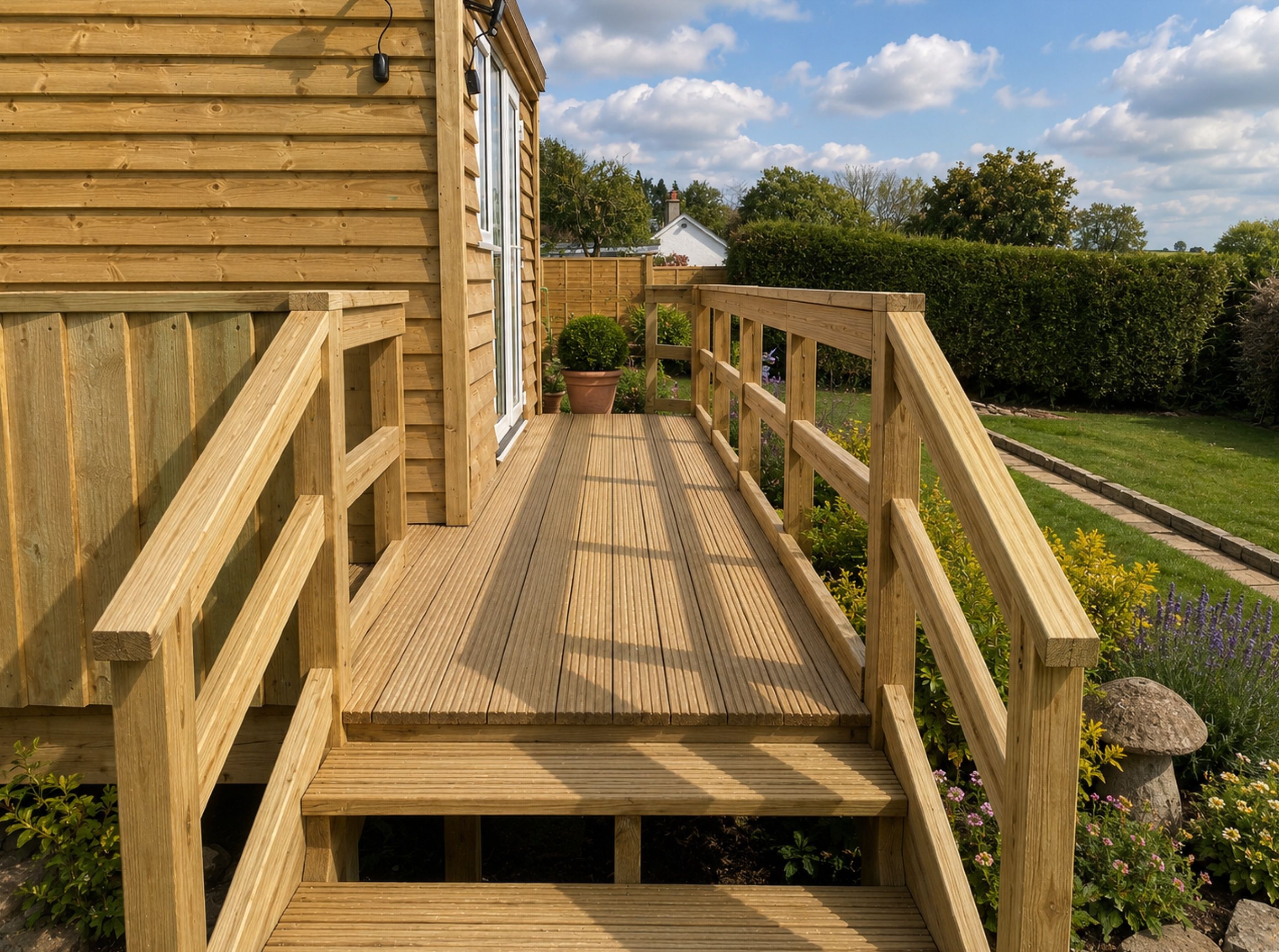
Garden decking can create a useful place for outdoor dining, a seating area or a connection between the house and garden. It can also offer a way to make use of a sloping site, provided the supporting structure is properly designed.
When planning timber decking, I look at the whole job: the size and position, the finished height, the supports, drainage, access, steps and any guarding or handrails needed.
The boards are what you see, but the frame underneath is where a sound installation begins. Timber sizes, joist spacing and support positions need to suit the chosen boards, spans and intended use. Board gaps and fixings should follow the relevant product guidance.
If an existing deck is being replaced, its framework needs inspecting before anyone assumes it can stay. The full condition may only become clear once the old boards have been lifted.
Bringing fencing, decking and gates together
A garden often looks more considered when its timber features work together. A matching gate, a neatly finished screen beside the deck or steps positioned along a natural walking route can make the space easier to use.
This does not mean everything has to look identical. It means thinking about proportions, materials and how one part meets the next.
That is the part of bespoke garden carpentry I enjoy: making something fit the space and the way you want to use it.
Planning checks before starting
Check boundary ownership and discuss proposed changes with your neighbour before work begins. Fence height, proximity to a highway, listed buildings and restrictions on permitted development can affect whether permission is needed. Planning Portal provides guidance on fences, gates and garden walls in England.
Decking proposals should also be checked with the local planning authority where necessary, particularly when changing levels or working on a sloping site. Confirm the requirements for your property before committing to the design.
Looking after your fencing and decking
Outdoor timber benefits from regular attention. Clear away leaves and debris, keep drainage routes open and look for loose fixings or signs of deterioration.
Decking should be cleaned using a method suitable for the boards and finish. Algae and damp debris can make surfaces slippery, so keeping on top of cleaning matters as well as appearance.
Use treatments suited to the timber and follow the manufacturer’s instructions. Pressure-treated timber still needs checking and care; it should not be treated as maintenance-free.
Common fencing and decking questions
Can you replace just part of a fence?
That depends on the condition of the remaining fence and supports. A local repair may be possible, but it is worth checking the surrounding timber before spending money on new panels.
Can a deck be built on a slope?
It may be possible, but the slope affects the supports, height, access and design. A site assessment is the starting point.
What affects the price of fencing and decking?
Size, materials, access, ground conditions, removal of existing work and details such as gates, steps and handrails all affect the cost. Measurements and a look at the site help establish what is involved.
Which areas do you cover?
I’m based in Bere Alston and cover Devon and Cornwall, including Tavistock, Plymouth, Okehampton and Exeter. Get in touch with your location and a few details about the work you have in mind.
Talk to Colt Carpentry Devon about your garden
If you’re looking for garden fencing, timber decking, decking steps and handrails, or bespoke garden timber work in Devon or Cornwall, I’d be happy to discuss your ideas.
Have a look around the Colt Carpentry Devon website to see more of my work, then use the contact page to tell me about your project. A few photographs, rough measurements and your location are a useful starting point.
Get in touch today for a free quote.
Big or small, it’s all in the detail.
Website publishing details — keep separate from the blog
SEO page title: Fencing & Decking Devon & Cornwall | Colt Carpentry
Meta description: Garden fencing and timber decking across Devon and Cornwall. Explore Kevin’s practical guide and contact Colt Carpentry Devon for a free quote.
Suggested URL slug: fencing-decking-devon-cornwall
Main search phrases used naturally: garden fencing Devon; timber decking; fencing and decking Devon and Cornwall; garden carpentry; decking steps and handrails. Local place names include Bere Alston, Tavistock, Plymouth, Okehampton and Exeter.
Links to add before publishing: Link the relevant wording to your Fencing and Garden Timber page, Decking, Steps and Rails page, and Contact page. Use the existing page addresses from your website.
Photographs: Add your own completed fencing and decking photographs. Write alt text that describes each actual image, adding a location only where it is accurate. For example, “Timber garden decking with steps and handrail” if that is what the photograph shows.
Editorial note: Written as an original first-person draft for Kevin at Colt Carpentry Devon. Check that descriptions of working methods reflect your own practice before publishing. Keywords help describe the page’s subject; they do not guarantee Google rankings or website traffic.